ENG



What Are AI Agents
AI agents work from the information they’re given. They decide what to do, then do it. People set the goals and the limits, and nobody supervises each step.
Usually, an agent’s work breaks into four stages:
- Sense. The agent reads whatever users, databases or sensors send it.
- Decide. Process that input using algorithms or language models such as Claude.
- Execute the task. Call tools, change system records or deliver an answer.
- Improve where supported. Use feedback and previous outcomes to refine performance.
Images, audio and video are also within reach for some of them. With that added context, their answers come out more accurate.

Key Statistics for 2026
- Five hours back each week. That is how much time marketers save using generative AI, according to Salesforce. In 2024, 51% used it. By 2026, that share had reached 87%.
- Agent use and performance. Leading marketing teams are nearly twice as likely to use AI agents as underperformers, with savings reaching eight hours weekly, reports Salesforce.
- Budgets exceed readiness. CMOs allocate 15.3% of marketing budgets to AI, but only 30% say their teams are ready to scale it, according to Gartner.
- More leads at a lower cost. McKinsey reports that established AI systems in marketing and sales can reduce prospecting expenses by as much as 60%, while generating over 50% more leads.
- Most agents still follow a script. Menlo Ventures puts the share of deployed “AI agents” that can plan, observe and adjust independently at just 16%. Most run through predetermined steps.
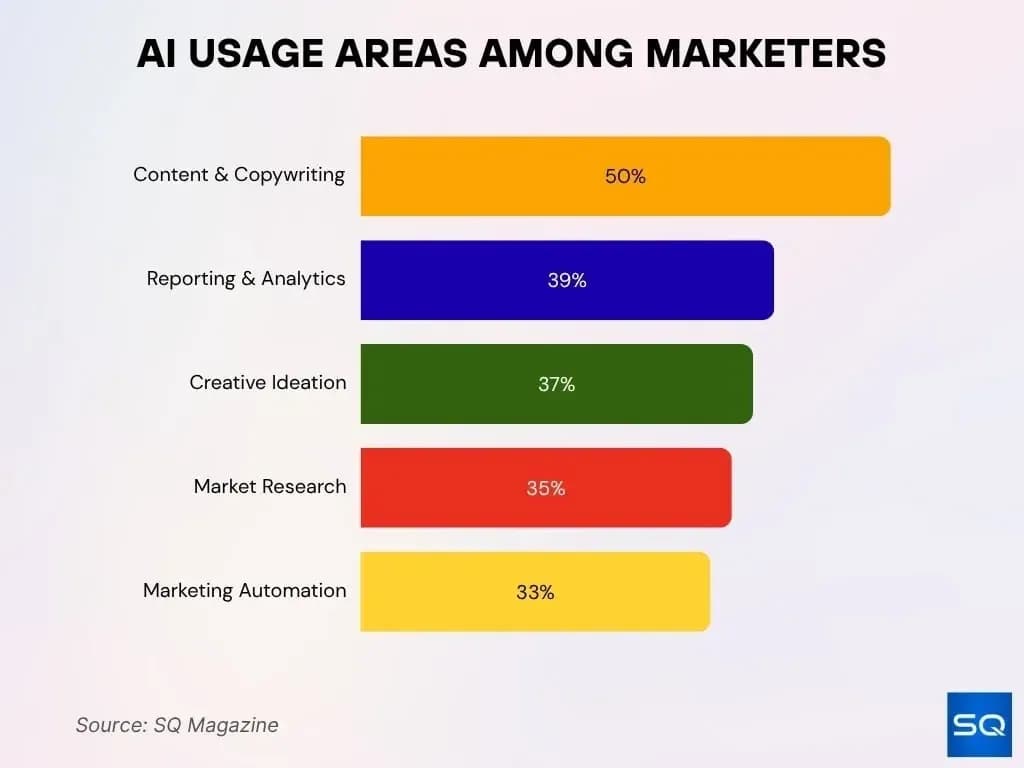
How Much Room Is There for AI Agents in Marketing
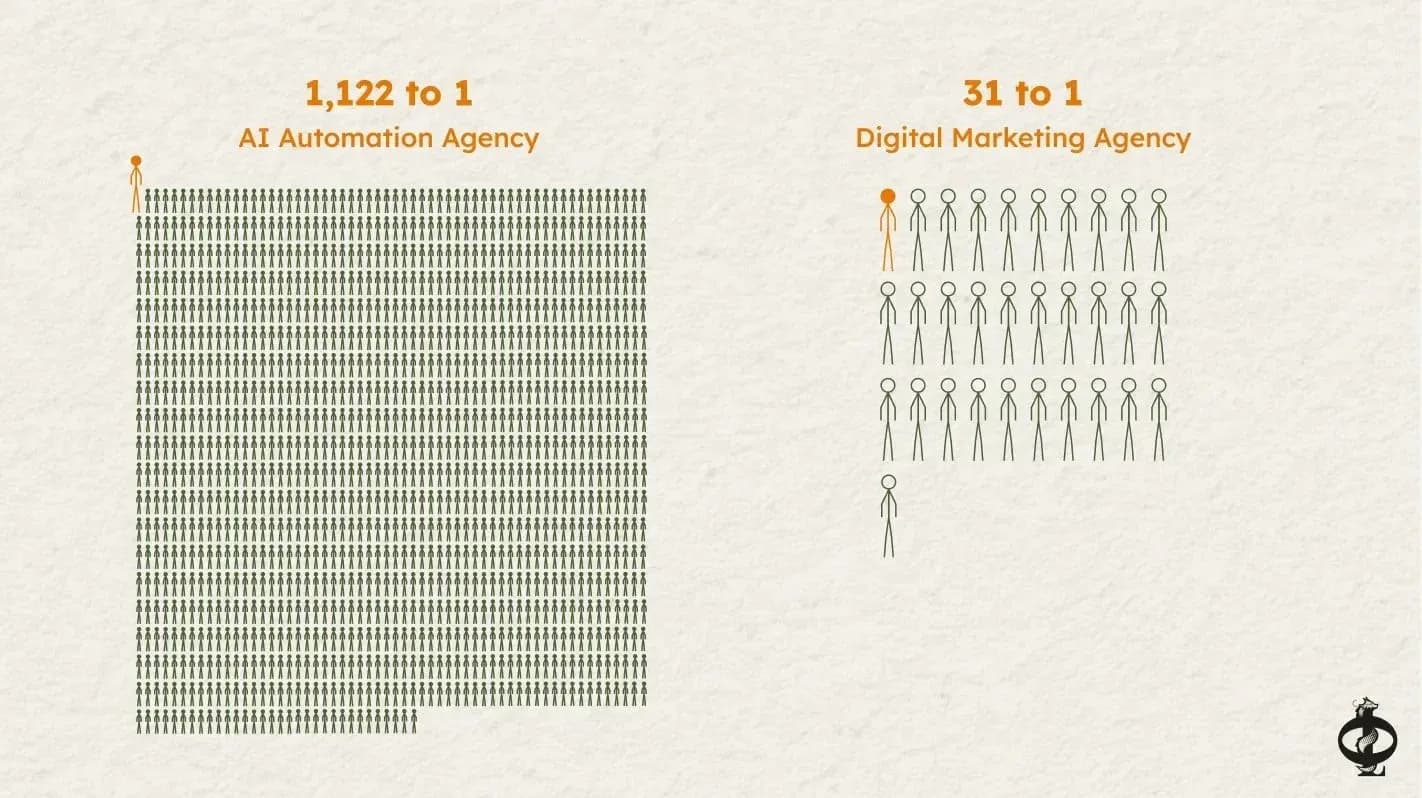
According to an estimate shared on X:
- 011.7 million US businesses with annual revenue of 500,000 – 10 million potentially need AI services.
- 02The US has roughly 15,000 AI agencies, or 113 potential clients per agency.
- 03Digital marketing has 31 businesses per agency, suggesting greater competition.
- 04Digital marketing developed over 25 years; AI agencies average two years old.
1. Deskferry: The Most Versatile AI Agent Platform for Marketing
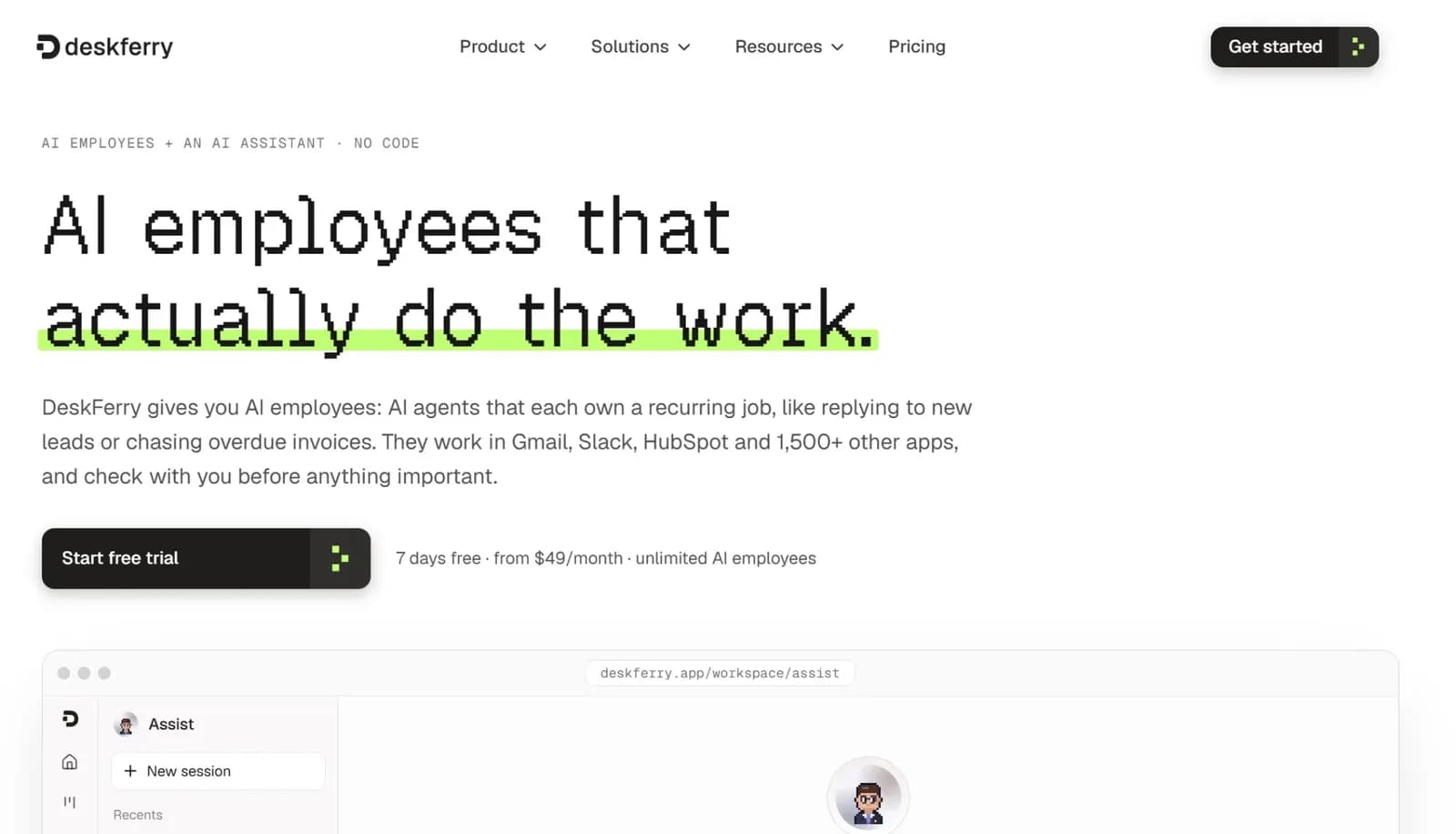
Marketers get AI agents that cover the entire stack with no engineering help, thanks to Deskferry’s 1,500+ integrations and 200+ ready-made templates.
- Standout features. Templates handle specific jobs like lead scoring, content repurposing, and competitor monitoring. They connect to major marketing tools out of the box, and a voice guide uploaded once shapes everything the agent writes.
- Edge over specialists. Unlike HubSpot Breeze or Salesforce Agentforce, it isn’t tied to one CRM, so Salesforce, Mailchimp, Google Ads, GA4, and Notion can run as one workflow.
- Best for. Teams of 1-50 using several tools who want automation without developers.
- Pricing. A 7-day free trial is available. Growth costs $49/month, Pro $99, and Scale $299, with 5,000-40,000 monthly credits and unlimited agents.
2. HubSpot Breeze: Best Pick for Teams Already on HubSpot
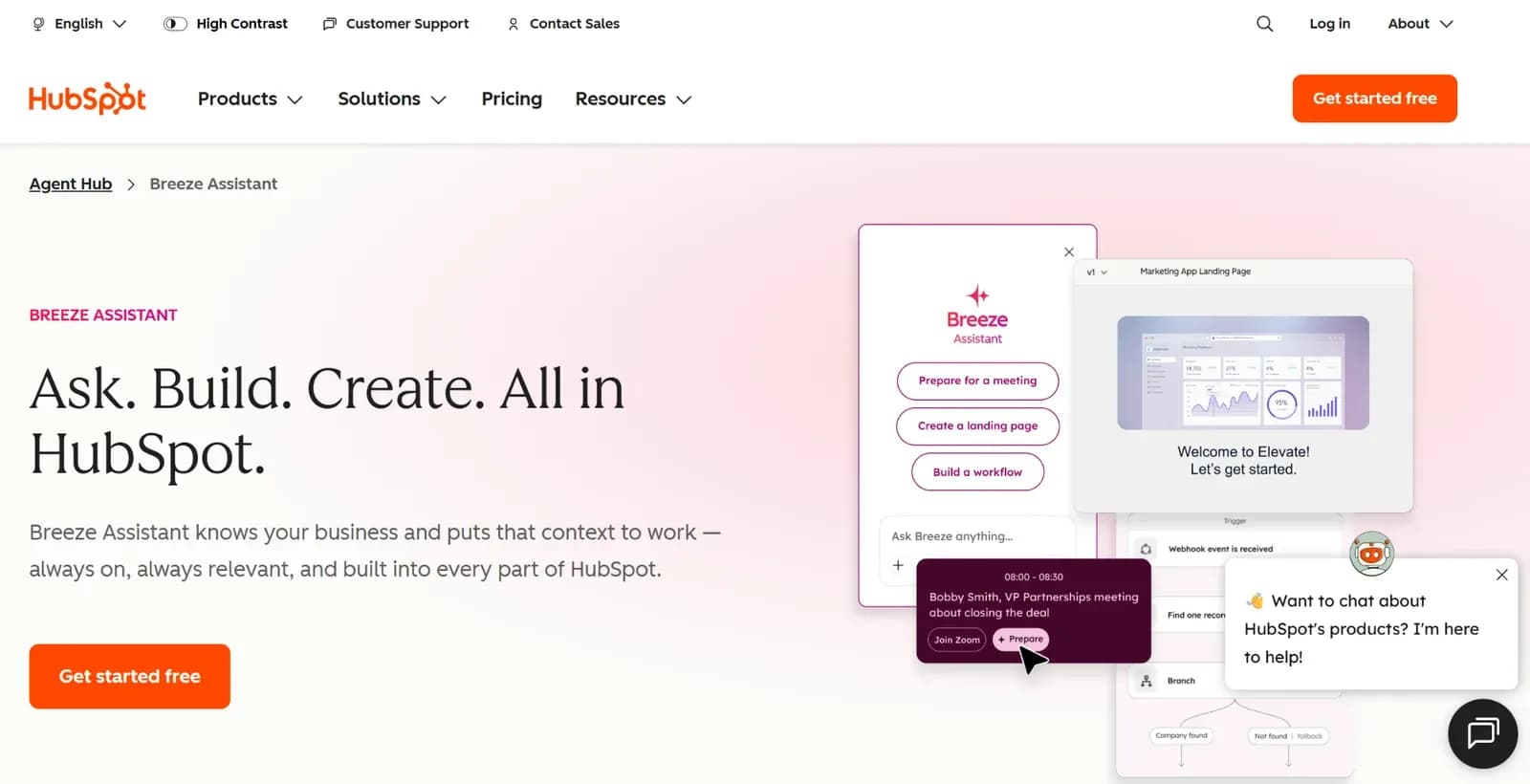
Breeze is the AI agent suite built into HubSpot’s Hubs, and the easiest way for HubSpot teams to add agents to their workflows.
- Standout features. Agents see all your HubSpot data, so a prompt like “draft a re-engagement email for contacts inactive for 90 days” works with no setup. The Content agent writes blog posts, landing pages, and social posts, and the Prospecting Agent handles outbound research.
- Limitations. It stops at HubSpot’s edge. Data in Mixpanel, Snowflake, or other ad platforms needs Zapier, Deskferry, or another orchestrator.
- Best for. Teams that use HubSpot as their system of record.
- Pricing. The free plan includes Breeze Assistant. Starter begins at €7/seat/month, Professional at €90, and Enterprise at €175 with annual billing. AI agents use HubSpot Credits.
3. Salesforce Agentforce: Best Pick for Salesforce Marketing Cloud
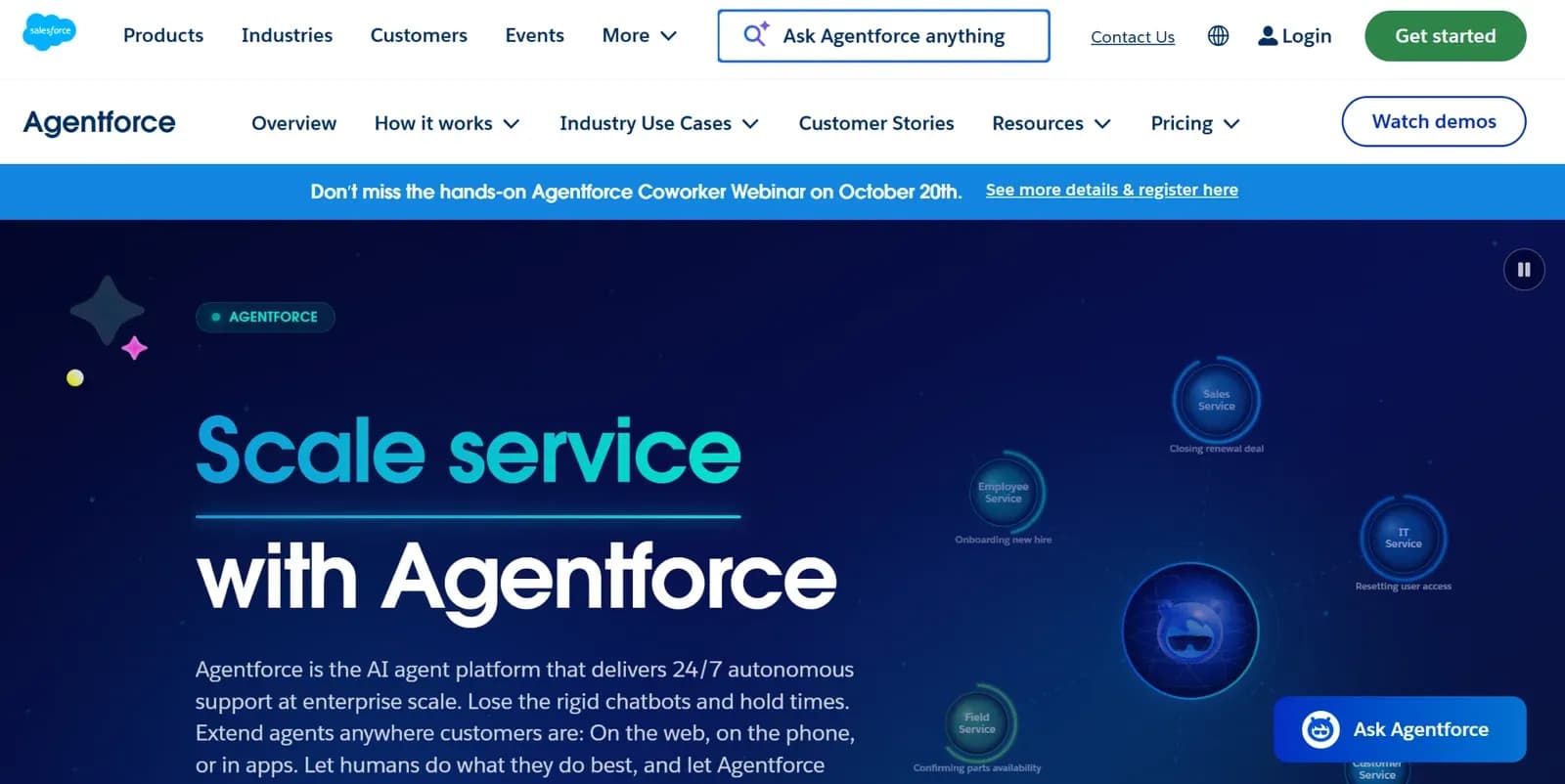
Agentforce is Salesforce’s AI agent platform with marketing agents built into Marketing Cloud, Data Cloud, and Account Engagement, and for enterprise teams already on Marketing Cloud, the integration is unmatched.
- Standout features. Agents use Data Cloud unified profiles, so segmentation, journeys, and personalization rely on full customer context. The Marketing Agent runs campaigns from brief to launch.
- Limitations. It’s expensive, priced on top of Marketing Cloud and Data Cloud licenses, and setup needs a Salesforce admin or partner.
- Best for. Enterprise teams on Marketing Cloud and Data Cloud.
- Pricing. Two ways to pay for Agentforce: $2 per conversation, or a pack of 100,000 Flex Credits for $500. Marketing Cloud Next Growth is a separate cost, from $1,500 a month on an annual contract.
4. Zapier: Best Pick for Trigger-Based Marketing Workflows
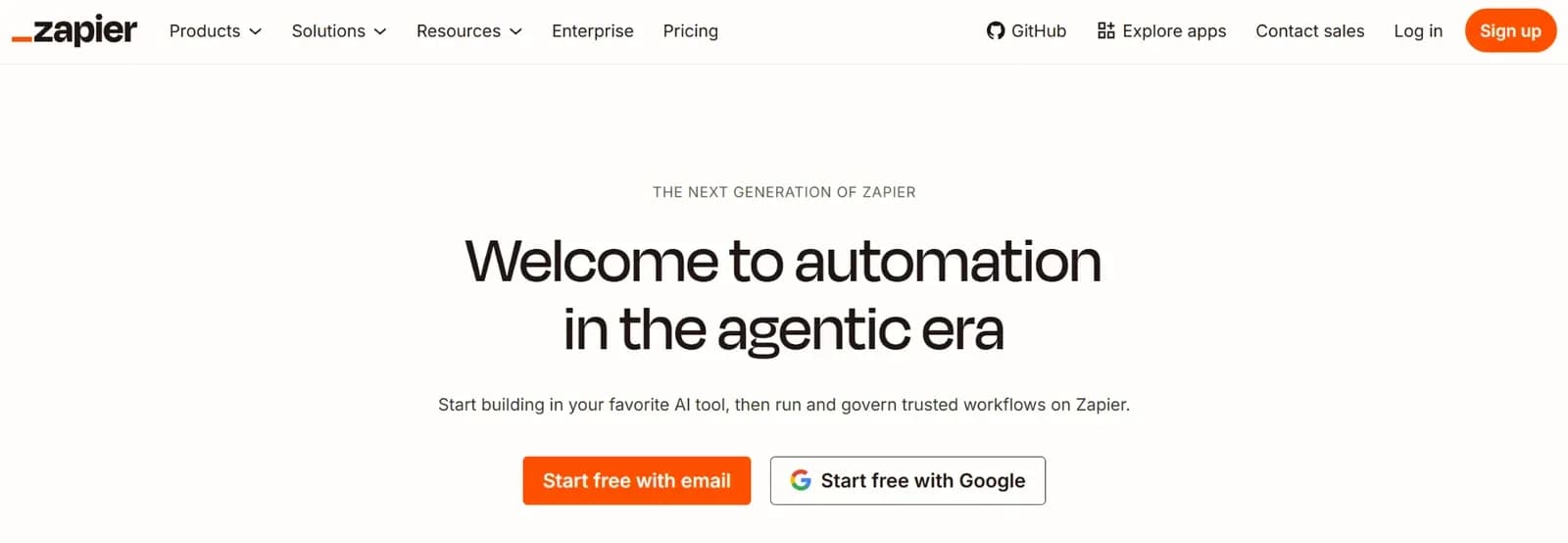
Zapier’s AI agents have matured, and for mid-market teams with many SaaS tools, it’s still the easiest way to add AI to existing workflows.
- Standout features. Its 7,000+ app catalog covered every marketing tool we tested, even niche ones like Heyflow, Apollo, and Customer.io. The natural-language agent builder suits marketing managers without engineers.
- Limitations. It works best for trigger-based automations and struggles with complex multi-step agents. Branching workflows are better handled by Deskferry or Make.
- Best for. Teams that built their automations in Zapier and now want AI added on top of them.
- Pricing. Agents Free includes 400 activities/month. Agents Pro costs $33.33/month with annual billing for 1,500 activities.
5. Jasper AI for Marketing Content
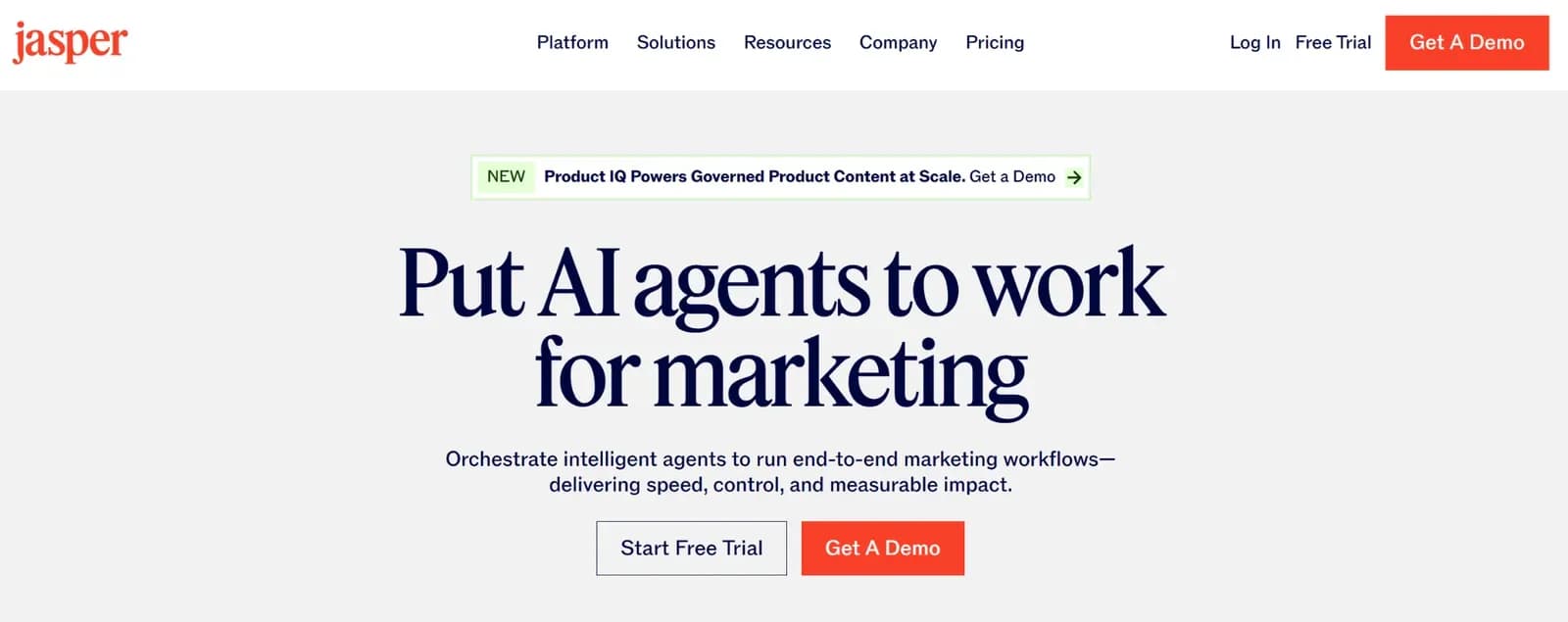
With Jasper, a team can put together blog posts, ads, emails, and briefs without the brand’s voice shifting from piece to piece.
- Brand voice. Feed Jasper your existing content and it picks up the style, then writes new copy in that voice.
- Marketing Agents. The built-in agents come ready to draft SEO articles, ad campaigns, and email sequences.
- Limits. Jasper stops at content. Lead scoring and handing leads off to sales aren’t part of it, so you’ll need a separate workflow tool for that.
- Pricing. Pro costs $59/seat/month annually or $69 monthly. Business pricing is custom.
6. Copy.ai: Best GTM AI for Sales-Aligned Marketing
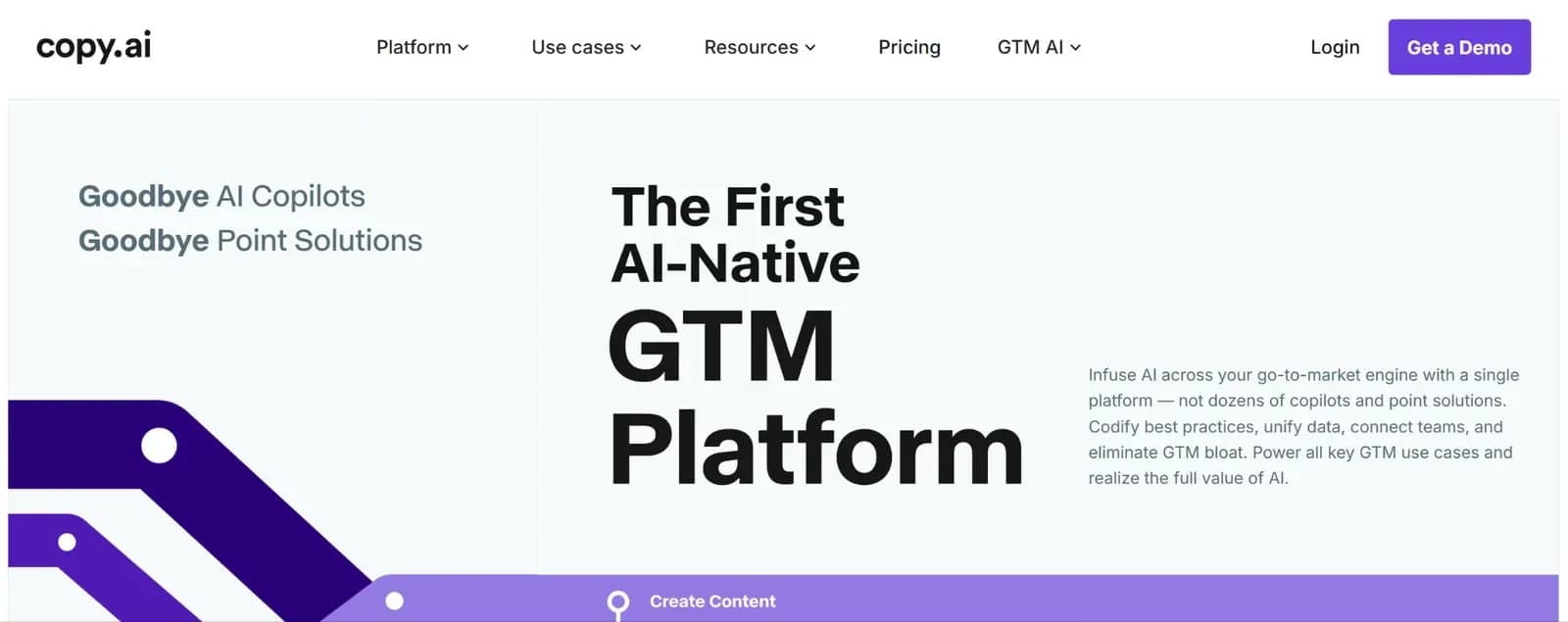
Copy.ai has shifted from writing copy to a “GTM AI” platform, with workflows built for marketing that works alongside sales.
- Standout features. Marketing and sales get the same account brief, and Copy.ai writes it. It reads public sources, enrichment APIs, and your CRM, so there’s no manual digging. The ABM and revenue marketing workflows are set up ahead of time.
- Limitations. Don’t expect full automation. Like Jasper, Copy.ai sticks to content and workflows, and Deskferry, Zapier, and Make plug into more tools.
- Best for. Revenue marketing and ABM teams whose AI-driven content has to support the sales process.
- Pricing. Chat costs $24 a month billed annually, or $29 month to month. Growth: $1,000/month annually, with 20,000 workflow credits.
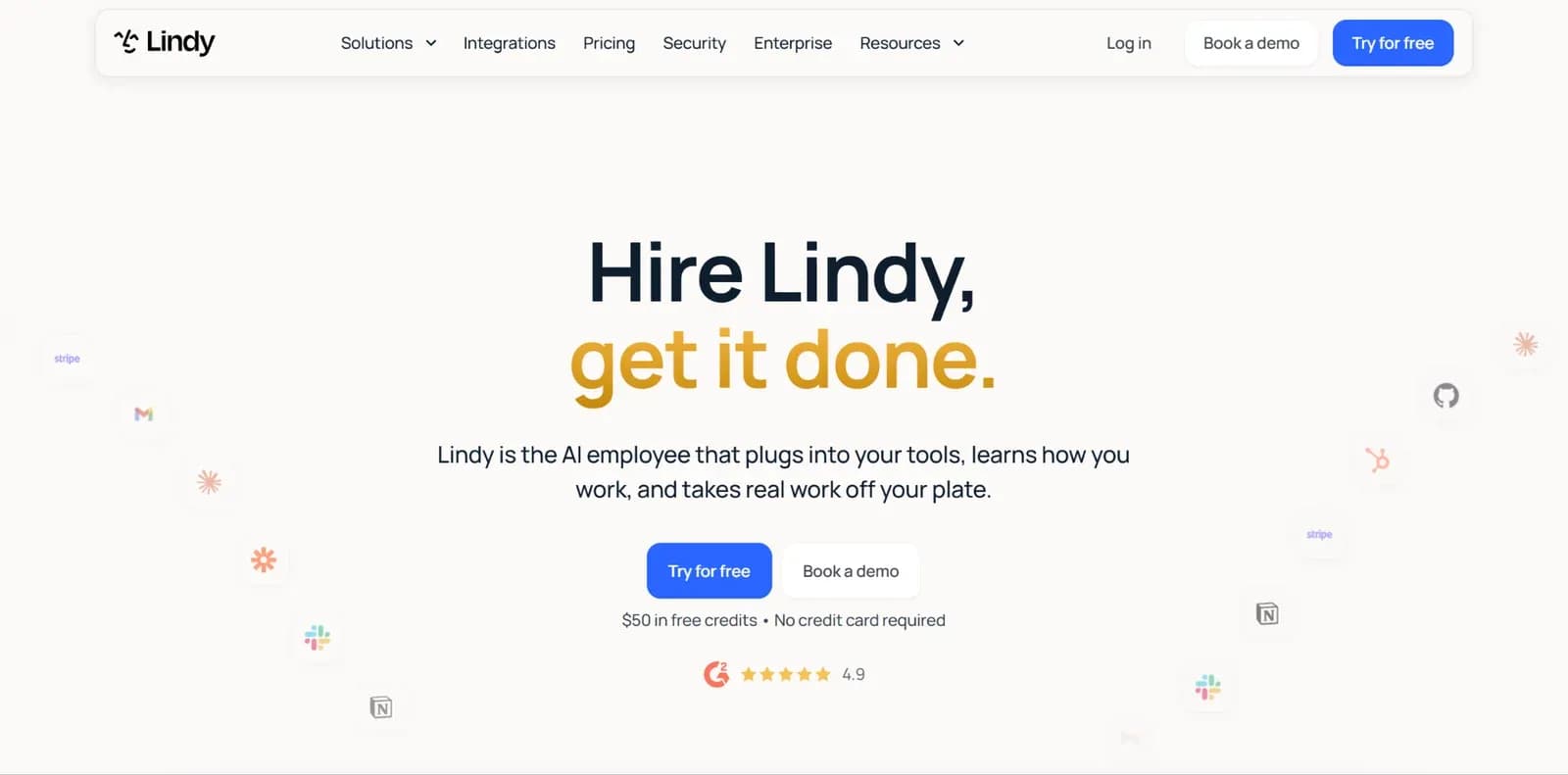
7. Lindy AI: Best Personal Assistant for Marketing Managers
Lindy is built around personal AI assistants rather than full marketing automation, but it earns a spot because it takes on the admin work that eats a manager’s creative hours.
- Standout features. Lindy’s agents take meeting prep, inbox triage, and scheduling off senior marketers’ plates. They can also be linked, so a lead moves from research to outreach to a booked meeting logged in the CRM.
- Limitations. It isn’t made for team-scale automation. For thousands of leads, multichannel distribution, or campaign reporting for a team of ten, choose Deskferry, HubSpot Breeze, or Salesforce Agentforce.
- Best for. Individual marketing managers and senior marketers who want their time back.
- Pricing. The free trial includes $50 in credits for 7 days. Team starts at $29.99/user/month with 3,000 credits. Enterprise pricing is custom.
8. Make: Best for Complex Visual Marketing Workflows
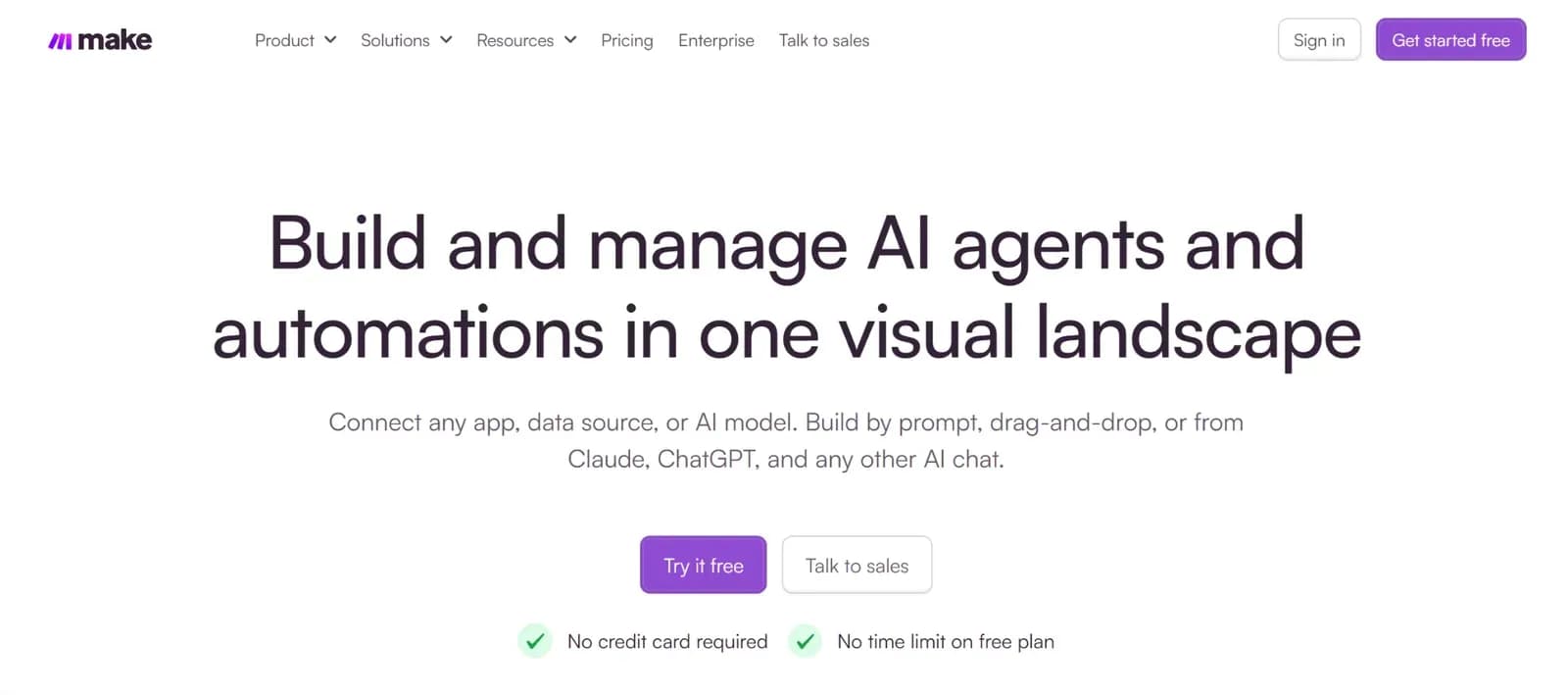
Make’s visual builder is among the most powerful in its category, and it handles branching workflows like multichannel launches, lead-routing trees, and content distribution that simpler tools force you to flatten.
- Standout features. Make’s router sends each lead down its own path: enterprise to an account exec, SMB to a self-serve email, mid-market into a 5-day nurture. It plugs into 1,800+ apps, covering all the big marketing tools. When a workflow breaks, the visual debugger points to the spot.
- Limitations. Make takes longer to learn than Deskferry or Zapier, especially for managers with no automation experience.
- Best for. Marketing ops teams that want fine control over complicated automations.
- Pricing. Free includes 1,000 credits/month. Core costs $9/month annually or $12 monthly, with 10,000 credits.
9. Relevance AI: The Pick for Marketing Teams Working With Big Data
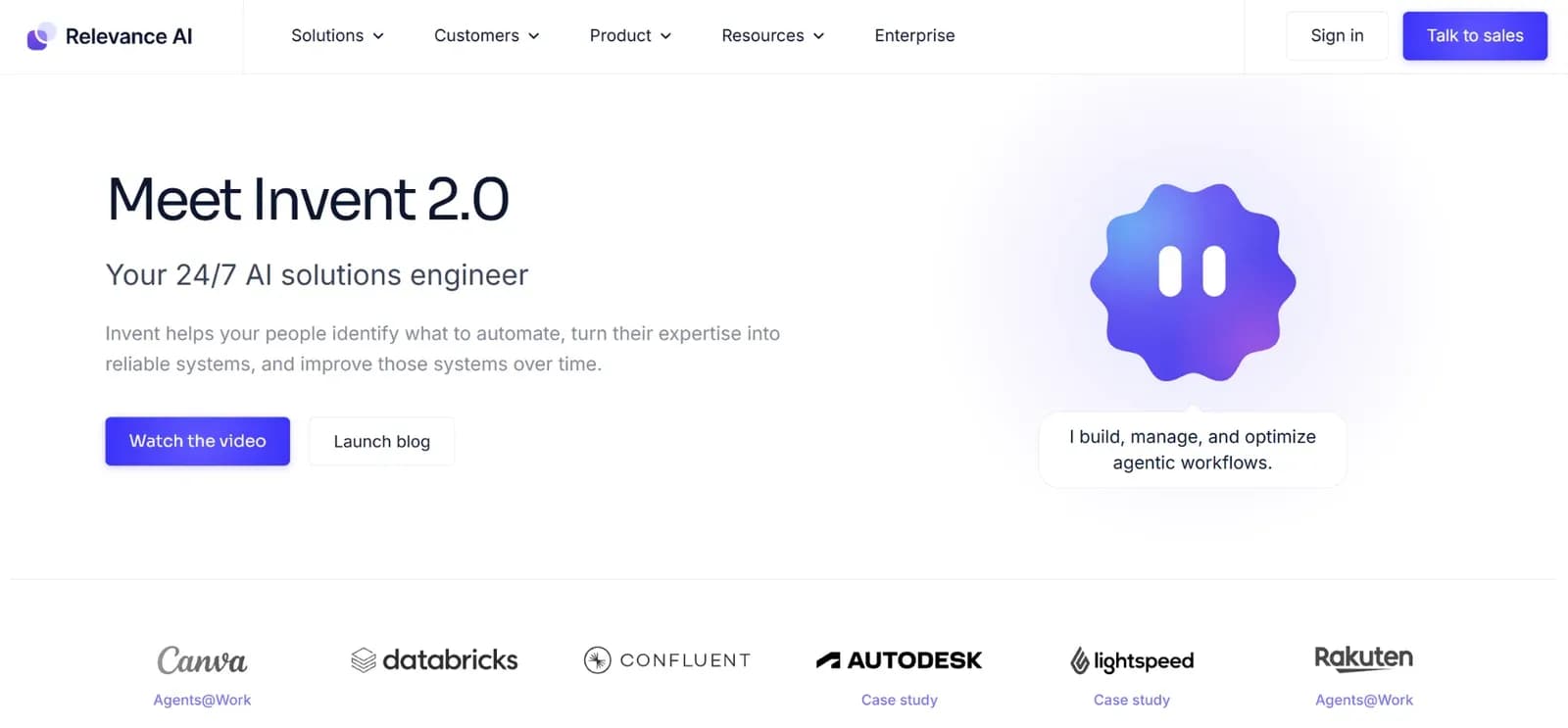
Relevance AI fits people who live in spreadsheets and dashboards. Its agents segment audiences, build reports, and analyze structured data.
- Standout features. Its ready-made templates for customer segmentation, churn analysis, and weekly reporting are well designed. A dashboard shows what your agents are doing, and it’s more transparent than most rivals offer.
- Limitations. Documentation lags behind the platform’s features. Some features unlock only on higher plans, which can catch smaller teams off guard.
- Best for. Marketing ops and analytics teams running agents over structured data.
- Pricing. Pro starts at $19/month annually or $29 monthly. Team costs $234/month annually or $349 monthly. Enterprise pricing is custom.
10. n8n: Best Open-Source Pick for Self-Hosted Marketing Agents
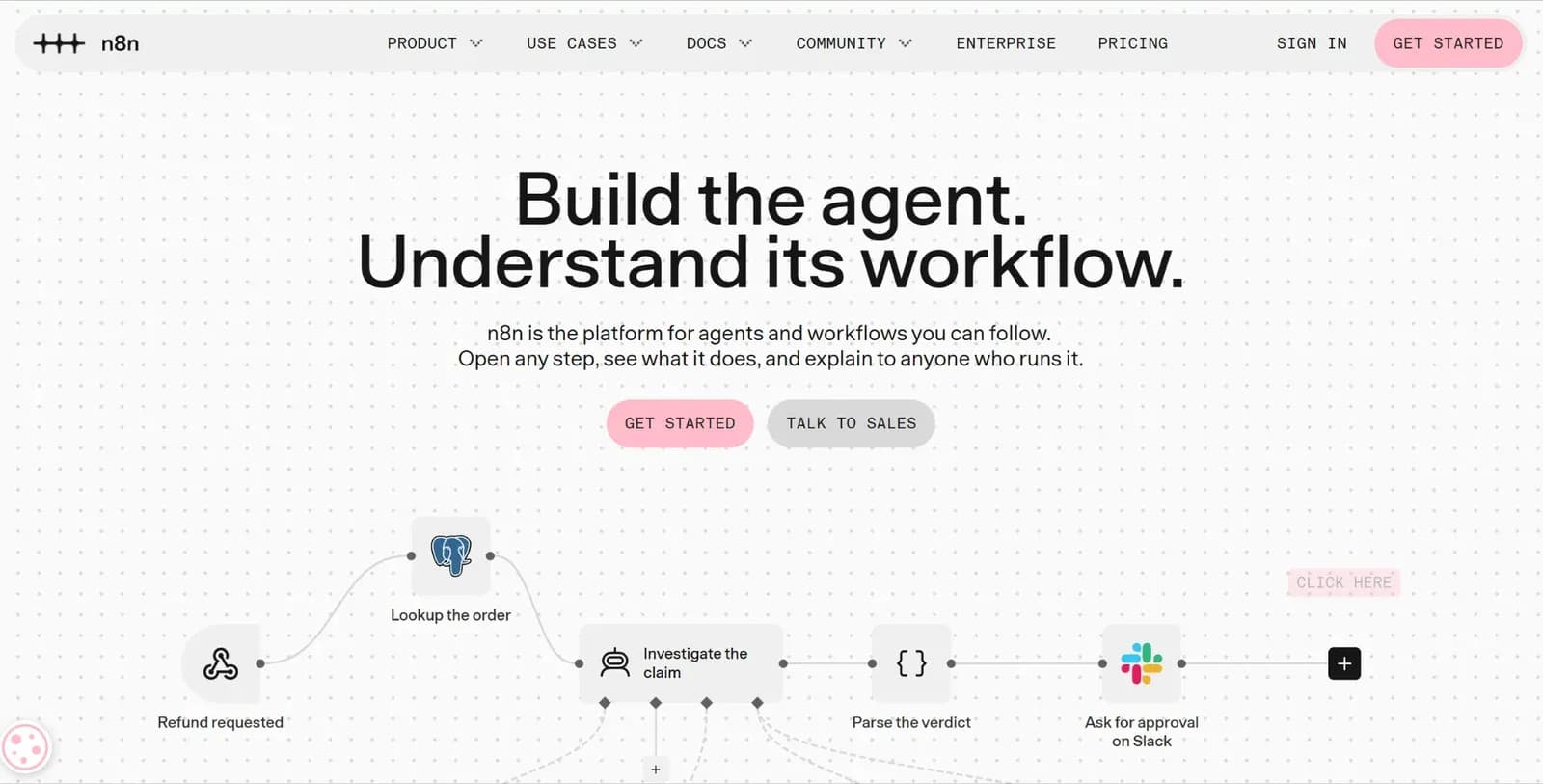
n8n is the open-source pick for marketing teams that want full control over their data. Healthcare, finance, and legal teams use it, and so do EU teams bound by strict data residency rules.
- Standout features. Because everything runs on your own servers, sensitive PII in nurture campaigns never leaves your control. The 400+ ready-made connectors include HubSpot, Salesforce, Mailchimp, Google Ads, and GA4, and the API-call node can reach whatever those don’t cover.
- Limitations. It’s much harder to learn than no-code platforms, so teams without technical support will struggle. Hosting and maintenance also take real effort.
- Best for. Technical marketers in regulated industries, or anyone bound by data residency rules.
- Pricing. Self-hosted Community Edition is free. Cloud Starter costs €20/month annually for 2,500 executions.
11. Akira AI: Quick Drafts for Content Teams
Akira AI writes the first version of your blog posts, social updates and email campaigns. One tool, no blank page.
- Standout features. Every draft follows your brand voice. Tone feels off? Tell the AI and it will redo the wording or reorganize the piece. You also get keyword and meta description suggestions. Finished drafts can also be adapted for a blog, newsletter or social.
- Limitations. It’s a writing tool, not an automation platform. Workflows that branch across apps are better handled in Make or n8n.
- Best for. Content marketers who want a usable draft quickly and more time for strategy.
- Pricing. With annual billing, Starter costs $9/month for 120 credits, Pro $24 for 600, and Max $49 for 1,800, renewing at $79. Business plans are listed separately.
12. Botpress: Chatbots You Build Yourself
Botpress lets you build your own AI chatbot. Teams put it to work on customer questions, support, and collecting leads.
- Standout features. Build a bot for your use case, and it picks up on what users mean. It runs on your website, messaging apps, and support platforms, and analytics show how to improve it.
- Limitations. Costs grow with usage, since AI spend is billed on top of the plan fee. Beginners and non-technical users may also find it hard to learn.
- Best for. Businesses that want to scale support and engagement without adding headcount.
- Pricing. Free includes 100 conversations. Annually, Plus costs $150/month with $25 in AI usage; Team costs $750 with $150. Extra usage costs more; Enterprise pricing is custom.
13. IBM watsonx Assistant: Best for Omnichannel Customer Engagement
IBM’s watsonx Assistant is a conversational AI platform that builds LLM-powered chatbots and voice assistants for personalized, round-the-clock support.
- Standout features. It works across web chat, email, social, and SMS, and teams can build in low-code without leaning on IT. Analytics show what to improve. Camping World reported a 33% boost in agent efficiency.
- Limitations. Usage-based pricing can get expensive for smaller teams.
- Best for. Marketers who’d rather automate routine questions and spend their time on strategy.
- Pricing. A 30-day free trial is available. Essentials starts at $530/month, Standard at $6,360, and Premium pricing is custom.
14. Chatsonic: Best for Marketing Chat and Content
Chatsonic, from Writesonic, is an AI assistant that helps marketers with content creation, data analysis, and campaign management.
- Standout features. Chat by voice or text, and it writes blog, ad, and social copy. Google Search keeps answers fresh, and brand personalization shapes the messaging across platforms.
- Limitations. The free plan is basic, with simpler models, basic search, and few integrations.
- Best for. Marketers who want content, research, and campaigns in one place.
- Pricing. Chatsonic lists a free tier and Individual at $16/month annually. Current Writesonic plans start at $79/month annually.
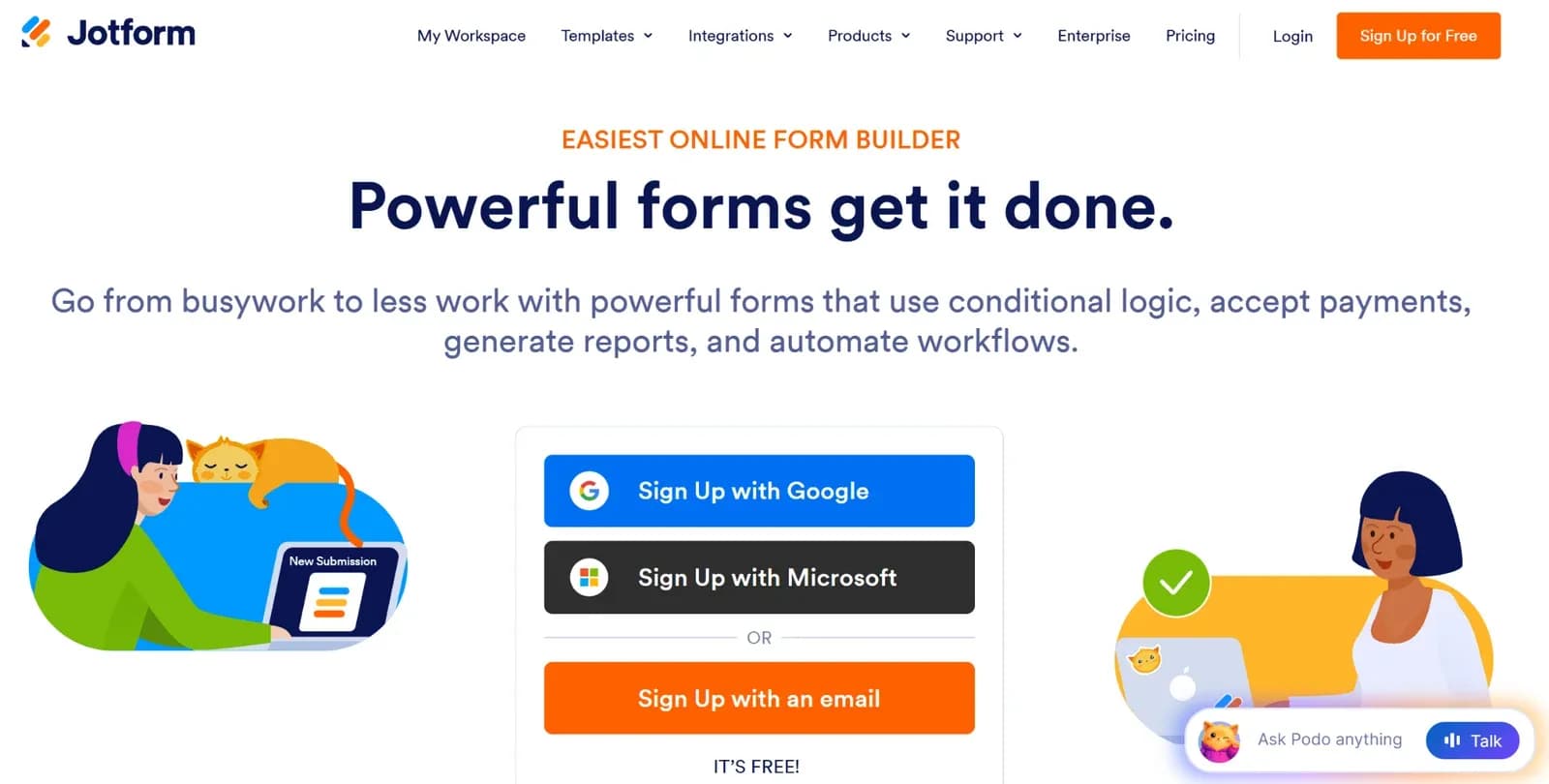
15. Jotform AI Agents: Support Bots, No Coding
Jotform’s AI agents handle customer questions, walk people through forms, book appointments, and even take donations. You don’t write any code.
- Standout features. No blank canvas here: you get 7,000+ templates for typical support work. Brand one, then pick where it runs: chat, SMS, voice, email, or WhatsApp. Staff can step in from the mobile app.
- Limitations. Your plan caps agents, conversations, and voice minutes. Works best if you already use Jotform.
- Best for. Small and mid-sized teams with no developers that still want support on several channels.
- Pricing. Starter is free. Paid tiers start at $39 a month (Bronze), then $49 (Silver) and $129 (Gold). An annual plan takes up to 20% off. Enterprise is priced on request.
Need expert guidance?
Let’s build what’s next.